

Musical instrument repair shops
Shedd Go for South Florida musical instrument repair shops
October 20, 2026
Quick answer
Musical instrument repair shops can use Shedd Go clothing drop-offs to create opportunities for relevant accessory sales without turning every visitor into a repair customer. Partners earn per accepted bag, while staff can offer strings, reeds, maintenance supplies, or a future repair booking when the visitor has a genuine musical need.
How can Shedd Go drop-offs help an instrument repair shop sell useful add-ons?
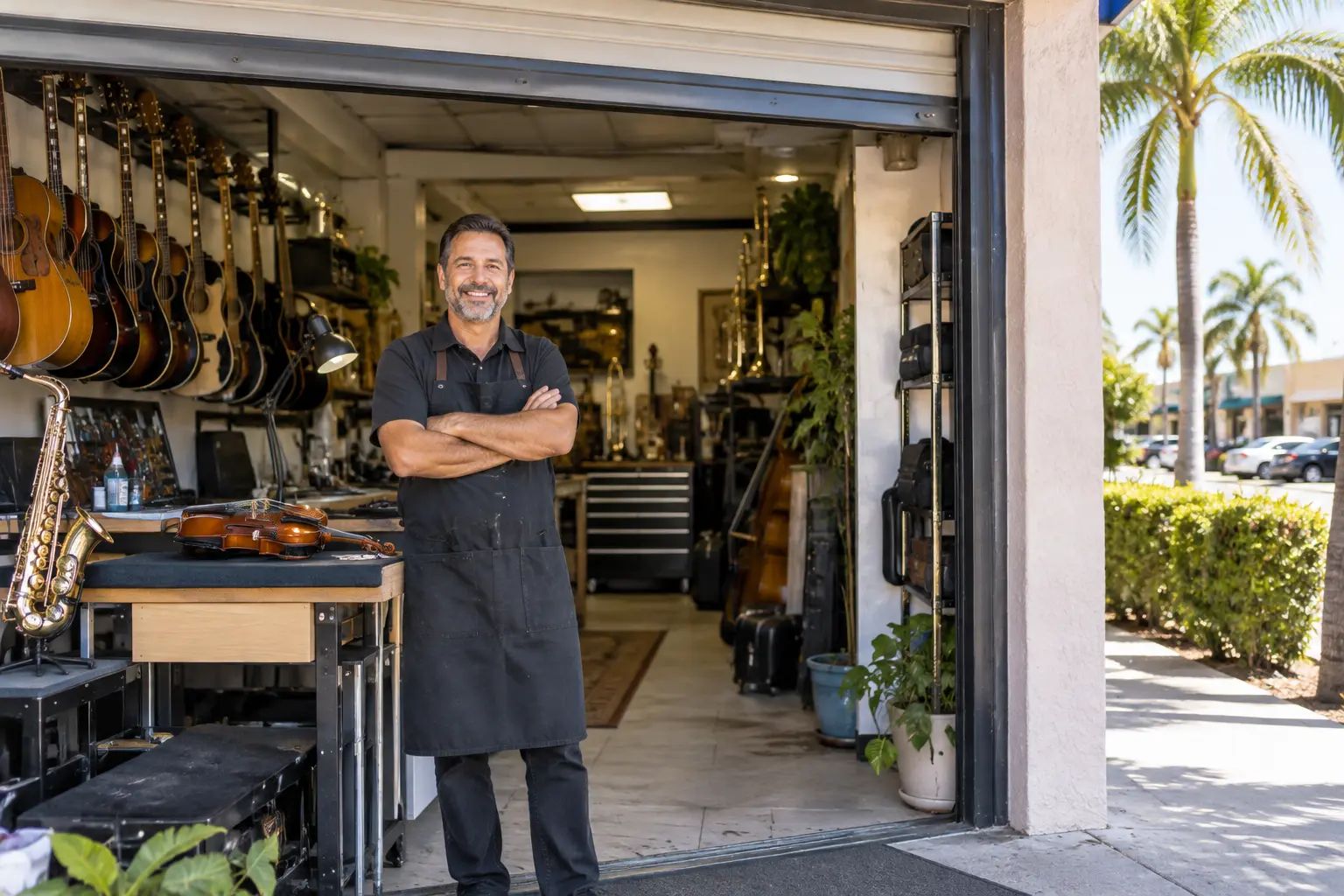
A clothing drop-off gives someone a reason to enter your shop without needing a guitar setup, saxophone adjustment, or bow rehair that day. That creates an opportunity—not a guaranteed sale—to introduce your repair services and recommend an accessory they actually need.
Shedd Go is a network of local businesses accepting sealed clothing bags from sellers on Shedd, the resale marketplace that sells people’s clothes for them. It is launching in South Florida, including Miami, Fort Lauderdale, Boca Raton, and West Palm Beach.
For an instrument repair shop, the strongest approach is simple: complete the bag check-in first, then make one relevant offer. Keep the drop-off convenient whether the visitor buys something or not.
Which add-ons fit a clothing drop-off visit?
Start with products your shop already stocks and understands. A visitor carrying clothing may be a musician, a band parent, or neither. Ask before recommending anything.
A natural opening is: “Do you or anyone at home play an instrument?” If the answer is no, thank them and finish the handoff. If yes, follow their answer rather than delivering a general sales pitch.
- For guitar and bass players: Ask about instrument type and preferred string gauge before suggesting strings. Picks can be a straightforward option when the player knows their preferred thickness.
- For woodwind players: Confirm the instrument, reed brand, and strength. “My child plays saxophone” is not enough information to select the right reeds.
- For brass players: Offer maintenance supplies appropriate to the instrument and manufacturer’s guidance. Avoid presenting valve oil and slide lubricant as interchangeable.
- For bowed-string players: Ask what instrument they play before discussing rosin, strings, or care supplies. Route fit-sensitive purchases to someone qualified to advise.
Keep prices visible. An accessory should solve a recognizable problem, not feel like a condition of leaving the bag.
Where should bags go in a working repair shop?
Shedd Go bags must always stay behind the counter or in a back room, never in the customer area. Most contain 11–20 items, weigh about 10–20 pounds, and are roughly the size of one kitchen trash bag.
That makes storage planning important in a shop with instrument cases, repair racks, and delicate work in progress. Choose a dedicated bag-storage location separate from customer instruments, parts bins, and bench equipment.
Do not put bags on a setup bench, beneath hanging instruments, against a case rack, or beside soldering equipment and finishing supplies. Check that staff can move a bag into storage without stepping over open cases or carrying it through an active repair station.
Shedd Go provides daily courier pickups, but you still need room for bags awaiting collection. Before applying, picture the shop on a busy repair-intake day—not only when the counter is clear.
How should staff handle check-in without interrupting repairs?
Instrument intake often requires careful listening: which note buzzes, when a key sticks, or whether a fault happens only through an amplifier. A clothing drop-off should not interrupt that conversation halfway through.
Use a consistent counter routine:
- Acknowledge the visitor and finish the current customer’s essential intake details.
- Accept the sealed clothing bag and scan each bag at check-in.
- Move it to the designated behind-counter or back-room storage area.
- Ask an optional music-related question once the handoff is complete.
- Refer technical questions to the appropriate staff member or offer a later appointment.
Shedd Go has $0 setup and provides free preprinted QR labels, one per bag. Review how Shedd Go works before introducing the process to counter staff.
Keep repair tickets and bag check-ins distinct. Clothing should not enter your instrument intake queue, and a technician performing delicate work should not become the default person carrying bags.
What does a realistic day and income example look like?
The following scenario and all calculations are hypothetical, not guaranteed.
Imagine a Fort Lauderdale repair shop with a counter employee handling customer arrivals while a technician works on guitar setups and woodwind repairs. During the day, five visitors drop off clothing bags. The employee scans each bag and stores it behind the counter, away from waiting instruments.
One visitor mentions a child who plays clarinet. Rather than guessing a reed strength, the employee asks whether they have a photo of the current reed box. If the shop stocks the matching product, that creates a useful purchase opportunity. Another visitor asks about a buzzing guitar and receives information about booking an assessment—not a diagnosis of an instrument that is not there.
For an illustrative four-week period, suppose the shop accepts 25 bags per week, all containing 11–20 items:
25 bags × $2 per bag × 4 weeks = $200 in hypothetical bag income.
Suppose those visits also generate five additional accessory transactions per week averaging $8:
5 transactions × $8 × 4 weeks = $160 in hypothetical accessory sales revenue.
That would be $360 in combined receipts, not $360 in profit. Accessory costs, staff time, and other operating expenses still matter. The four-week illustration is not a forecast of a calendar month, and actual bag volume and purchases may differ.
How much does Shedd Go pay per bag?
Partner earnings depend on the item count in each bag:
- Up to 5 items: $1 per bag.
- 6–10 items: $1.50 per bag.
- 11–20 items: $2 per bag.
- 21 or more items: $3 per bag.
Most bags contain 11–20 items. Partners are paid once a month, and courier pickups occur daily. Keep bag earnings separate from accessory sales in your tracking so you can see what each activity contributes.
How can owners encourage purchases without slowing the counter?
Use your existing accessory display rather than creating a large new merchandising area. Position it where visitors can browse without blocking instrument handoffs, but never use that customer space to store clothing bags.
A small sign can say: “Play an instrument? Ask us about strings, reeds, and repair appointments.” List only products and services your shop actually offers.
Train staff to recognize when a conversation needs more time. Matching a familiar pack of strings may be straightforward; investigating intermittent electronic noise is not. Offer a proper intake appointment instead of an improvised counter diagnosis.
Track bag volume, resulting accessory purchases, and future repair inquiries separately. Ask buyers whether they came in for the drop-off so ordinary accessory sales are not automatically credited to Shedd Go. Do not count an inquiry as repair revenue before work is booked and completed.
Become a Shedd Go partner
If your South Florida instrument repair shop has suitable protected storage and a workable counter routine, apply to become a Shedd Go partner. Check participating drop-off shops for current locations, or email info@shedd.app with questions about fitting drop-offs around your repair workflow.
Key takeaways
- Complete the clothing bag check-in before offering an optional, relevant accessory.
- Confirm instrument details before recommending strings, reeds, or maintenance supplies.
- Store every bag behind the counter or in a back room, separate from instruments and repair work.
- Track bag earnings, accessory revenue, and repair inquiries separately.
- Shedd Go offers $0 setup, free QR labels, daily courier pickups, and monthly partner payments.
Frequently asked questions
How much can an instrument repair shop earn per Shedd Go bag?
Partners earn $1 for up to 5 items, $1.50 for 6–10 items, $2 for 11–20 items, and $3 for 21 or more items. Payments are made once a month; total earnings depend on actual bag volume and item counts.
Which add-ons should staff offer clothing drop-off visitors?
Offer products the shop already stocks, such as strings, picks, reeds, or appropriate maintenance supplies. First confirm that the visitor plays an instrument and establish the specifications needed for a suitable recommendation.
Can clothing bags sit beside the accessory display?
Not in the customer area. Bags must be stored behind the counter or in a back room, with a dedicated location separate from instruments, repair benches, and equipment.
Does hosting Shedd Go guarantee more accessory sales?
No. Drop-offs create opportunities for relevant conversations, but purchases are not guaranteed. Owners should measure resulting sales and account for merchandise costs and staff time.
Where is Shedd Go launching, and how can a shop apply?
Shedd Go is launching in South Florida, including Miami, Fort Lauderdale, Boca Raton, and West Palm Beach. Shop owners can apply at /apply or contact info@shedd.app.